
Quatermain's Journal
The Atacama Desert is among the driest and most unforgiving places on Earth. Within its abandoned settlements, caves and mineral workings, the desert has preserved objects that would have vanished almost anywhere else.
One such discovery became known as the Atacama Humanoid: a remarkably small skeleton with an elongated skull and unusual proportions. Its appearance led to years of speculation concerning its age, origin and possible identity.
Scientific examination identified the specimen as human, although questions surrounding its unusual development, treatment and original burial continue to hold the public imagination.
The Mystery
The mystery was never created merely by the specimen's size. Its narrow skull, reduced number of ribs and apparently mature skeletal features produced an appearance unlike that expected of an ordinary human infant.
Some observers proposed unknown medical conditions. Others suggested an ancient people, an elaborate construction or something originating beyond humanity. Scientific testing answered the broad question of human origin, but did not extinguish the fascination.
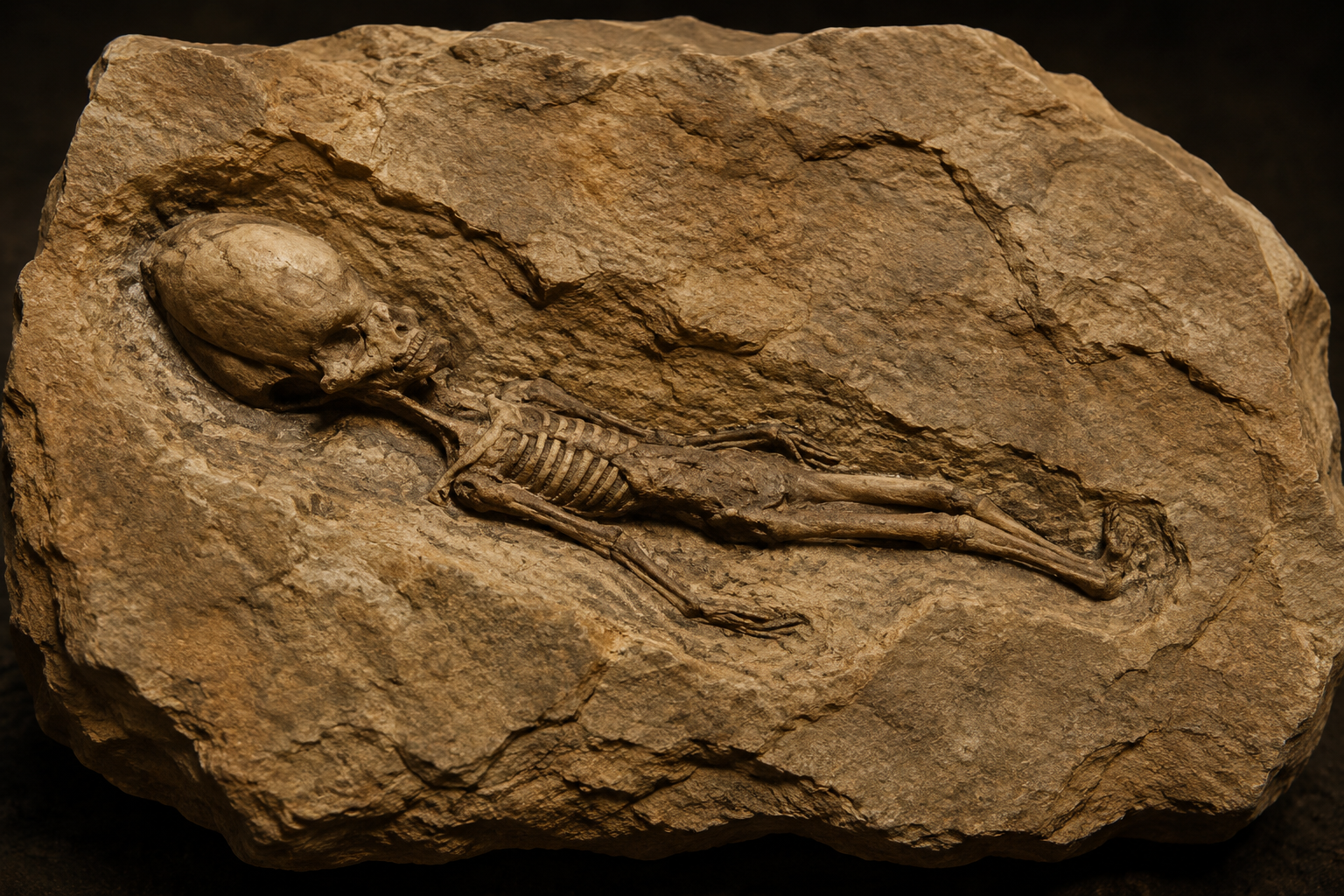
The Archive interpretation presents the figure as though uncovered from an ancient stone deposit—caught within the rock and preserved as an impossible fossil.
Quatermain Field Observation
> A mystery does not always disappear when one question is answered. Sometimes the answer merely removes the wildest possibility and leaves us facing the more human question of who this individual was—and why they were left beneath the desert.
Archive Notes
Associated Location: Atacama Desert, Chile
Classification: Archaeological Curiosity
Historical Inspiration: The Atacama Humanoid
Archive Form: Fossil-style stone interpretation
Reproduction Material: Hardened plaster
Archive Status: Planned for release when the Quatermain Official Emporium opens
Each piece will be cast and finished as an aged stone discovery, with natural variations in colour and surface detail.