
Quatermain's Journal
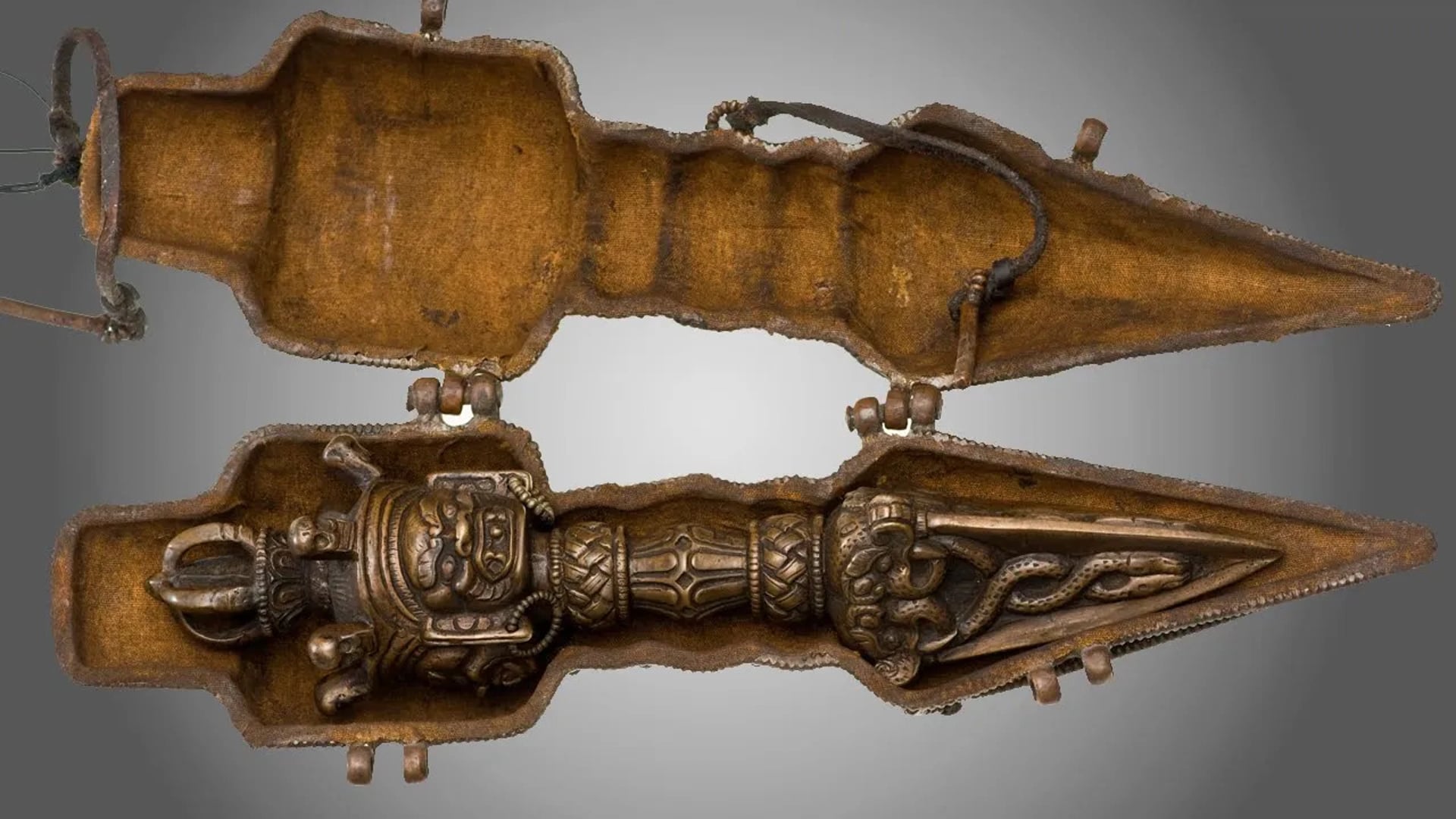
The phurba, also known as the kīla, is a three-sided ritual dagger found within Tibetan Buddhist and Himalayan traditions. It was never intended as an ordinary weapon. Its purpose was symbolic: to pin down destructive forces, overcome spiritual obstacles and transform harmful energies.
The distinctive triangular blade represents the destruction of ignorance, attachment and aversion. Many examples bear fierce protective faces, knotted forms and symbolic creatures intended to express authority over the forces of disorder.
The phurba was traditionally used during ceremonies in which its point might be driven into the earth, a ritual vessel or another symbolic surface. The action represented the fixing of unstable energy firmly in place.
The Mystery
The phurba occupies the uncertain ground between sacred implement, protective talisman and object of power.
Legends attribute certain examples to accomplished spiritual masters, claiming that their ritual use could subdue hostile entities, protect sacred ground or break unseen obstructions. Whether understood literally or symbolically, the object was treated with considerable respect.
Its three-edged form appears simple, yet almost every feature carries meaning. Faces, knots, blades and creatures combine into a compact map of transformation: confusion restrained, danger confronted and disorder brought under control.
Quatermain Field Observation
A blade usually divides one thing from another. The phurba was conceived for a stranger purpose—not to cut an enemy, but to hold chaos still long enough for a person to master it.
Archive Notes
Associated Traditions: Tibetan Buddhism and Himalayan ritual practice
Alternative Names: Phurba, Kīla, Ritual Dagger
Form: Three-sided symbolic blade
Purpose: Protection, transformation and the restraint of harmful forces
Archive Status: Reproduction Under Development
A Quatermain interpretation of the Tibetan Phurba is being developed for eventual release through the Emporium.