
Quatermain's Journal
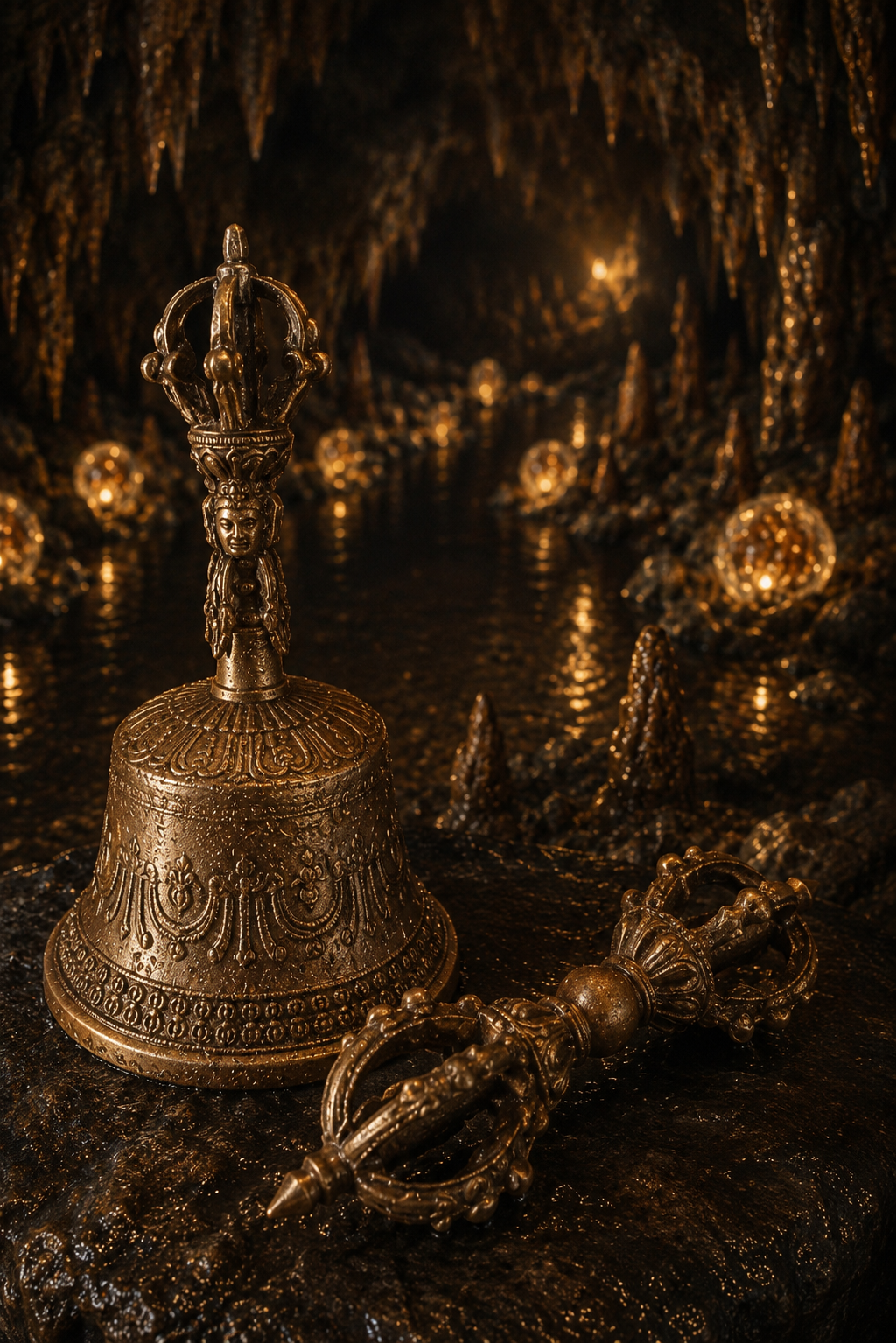
Among the ritual instruments of Tibetan Buddhism, few objects carry symbolism as concentrated as the vajra and bell.
The vajra, known in Tibet as the dorje, takes its name from an ancient word meaning both diamond and thunderbolt. The diamond represents that which cannot be broken, while the thunderbolt represents irresistible force. Its form developed from the legendary weapon of Indra, the Vedic god of storms, lightning and the heavens.
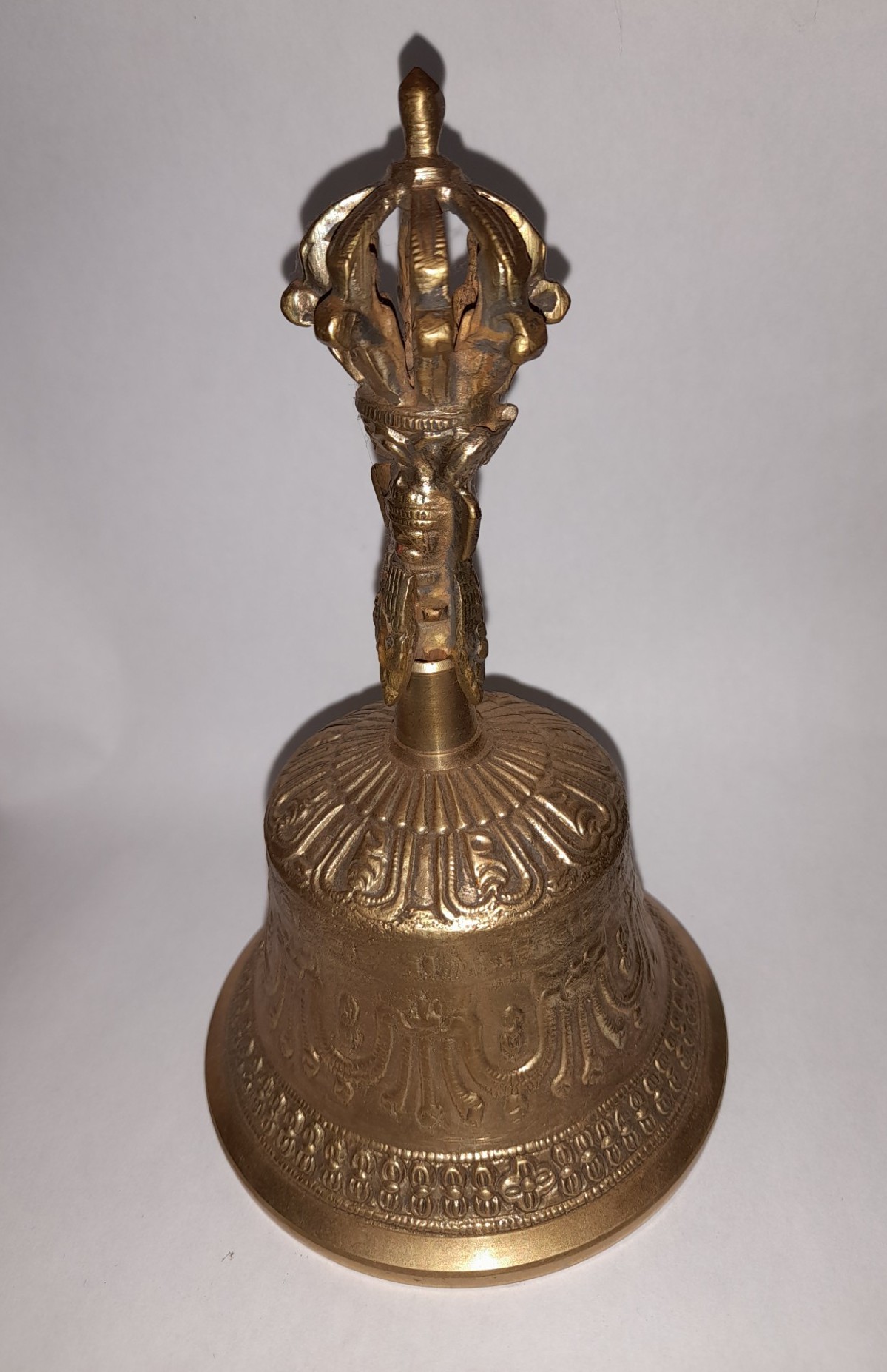
The accompanying bell is traditionally known as a ghanta, or drilbu in Tibetan practice. Its handle is crowned by a partial vajra, visually connecting the two instruments even when they were not originally manufactured as a matching pair.
The Nine-Pronged Form
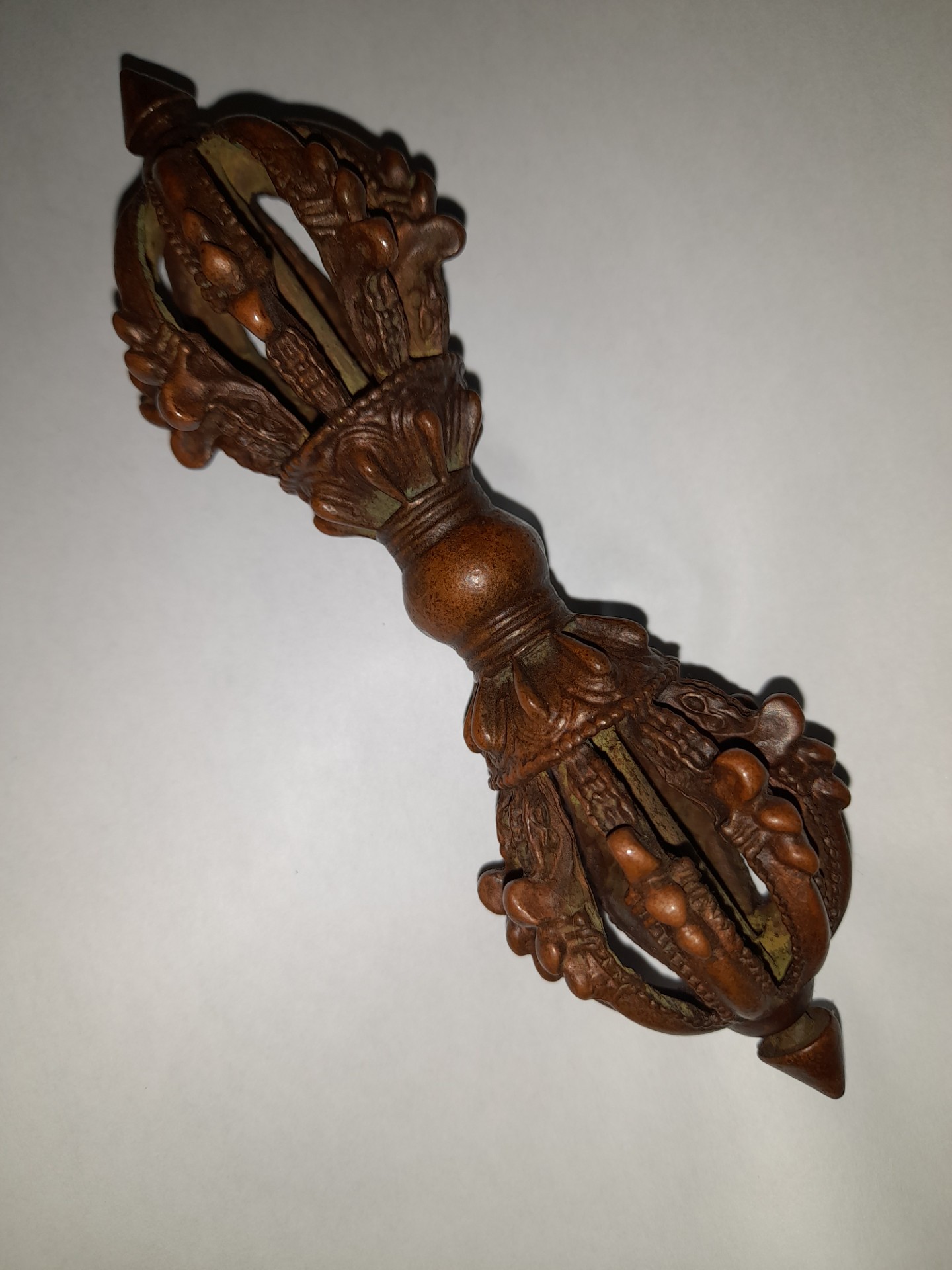
Most commonly encountered vajras have five points: four curved outer prongs surrounding one central point. The examples preserved here belong to the considerably less common nine-pronged form.
Each end of the vajra contains eight surrounding prongs arranged around a central axial point. The crown of the bell repeats this same ninefold geometry. Their precise interpretation may vary between particular Buddhist lineages, deities and tantric practices, and no single explanation should be imposed upon every surviving example.
The repetition is nevertheless deliberate. This is not merely an eight-pronged decoration. The central point forms part of the count, making both objects unmistakably nine-pronged.
The Ritual Pair
Within established Vajrayana practice, the vajra represents method, active compassion and spiritual force. The bell represents wisdom, emptiness and resonance. They are traditionally held together during ritual, expressing the principle that method without wisdom is incomplete, while wisdom without action remains unrealised.
Although these particular objects were collected separately and are not an original manufactured set, they remain complementary examples of the same uncommon nine-pronged symbolic system.
The Thunderbolt Question
The traditional explanation begins with a weapon. Before becoming a ritual emblem, the vajra was described as the thunderbolt of Indra: an irresistible divine instrument capable of striking with the force of lightning.
This origin has encouraged an alternative question. Could the surviving ritual form preserve the stylised memory of something once understood as a physical thunderbolt weapon or energy device?
Its conductive metal construction, directional points and repeated geometry are certainly suggestive. When paired with a metal bell capable of producing a sustained resonant frequency, the combination becomes more intriguing still: one object resembles a terminal or conductor, while the other introduces vibration and resonance.
No archaeological evidence presently demonstrates that the vajra generated electricity or functioned as a technological weapon. The possibility therefore remains speculation rather than established history. Yet the thunderbolt association is not a modern invention; it stands at the very beginning of the object's recorded identity.
Quatermain Field Observation
Symbols rarely retain their shape for centuries without reason. Whether these objects represent spiritual principles, preserve the memory of a legendary weapon, or combine both ideas, their form was considered important enough to repeat with extraordinary precision.
The bell gives voice to the silence. The vajra gives form to the thunderbolt. Together they leave us with something more valuable than an easy answer: a question that has survived.
Archive Notes
Object One: Nine-Pronged Vajra / Dorje
Length: Approximately 15 cm from point to point
Object Two: Nine-Pronged Ritual Bell / Ghanta
Height: Approximately 16 cm
Material: Metal alloy
Cultural Association: Tibetan Vajrayana Buddhist tradition
Historical Age: Undetermined
Archive Status: Display Only